
When the Background Becomes Part of the Artwork
One of the things I love about creating with alcohol inks and gel prints is that the process doesn’t necessarily end when the print is finished.
For me, a gel print can be the beginning of an artwork rather than the end.
A colourful, abstract background can suddenly suggest a landscape, foliage, flowers—or even a bird. Sometimes I look at the marks that have appeared almost by accident and begin to see something within them. Instead of starting with a completely blank surface, I can respond to what is already there.
Letting the background guide the artwork
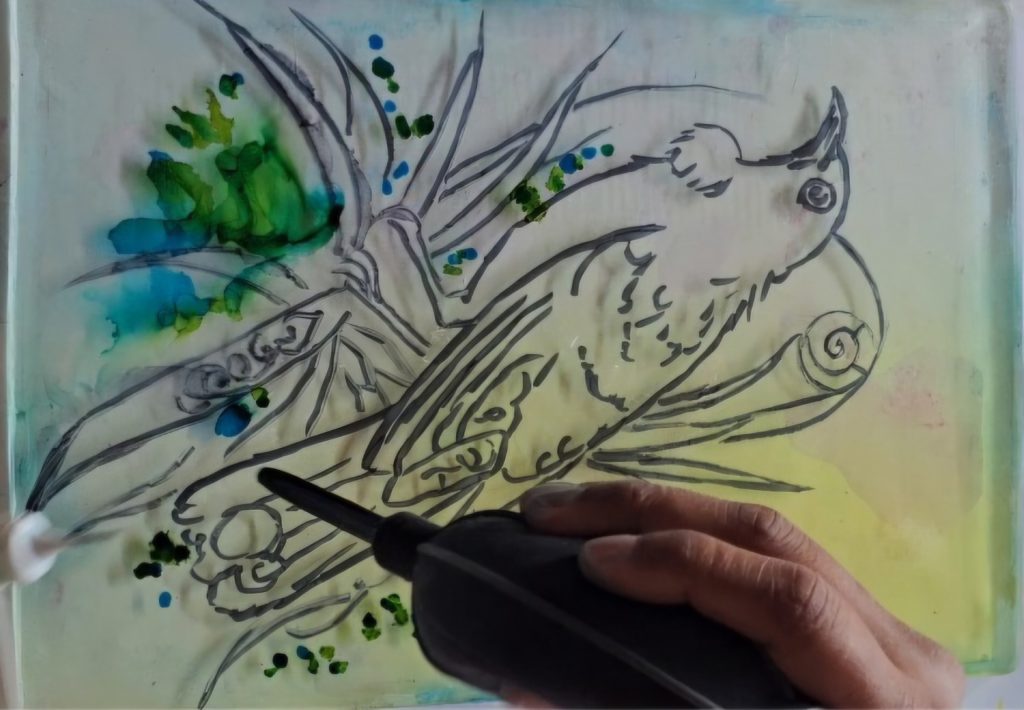
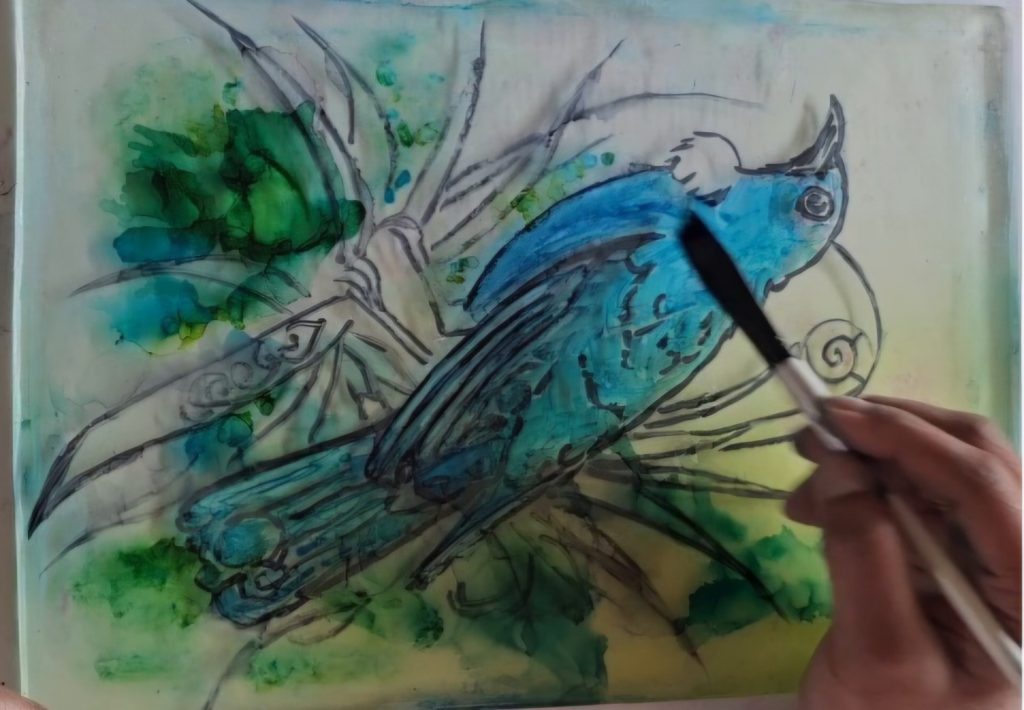
For this piece, I began by drawing the bird and surrounding foliage directly onto the gel plate with a black marker.
I then dropped some Piñata inks Rainforest Green, Baja Blue and isopropyl alcohol onto the plate and used the alcohol to blow the ink around the bird and foliage, creating the background colour.
I wasn’t concerned if some of the green landed on the bird or foliage. In fact, I quite liked the idea of allowing the colour to move into areas where it wasn’t necessarily planned.
As I worked, I noticed that some of the black marker lines from my original drawing were beginning to disappear. The black was mixing with the green, creating areas of variation and softer, less defined marks.
I was perfectly happy to let that happen.
Those unexpected changes become part of the character of the finished piece.
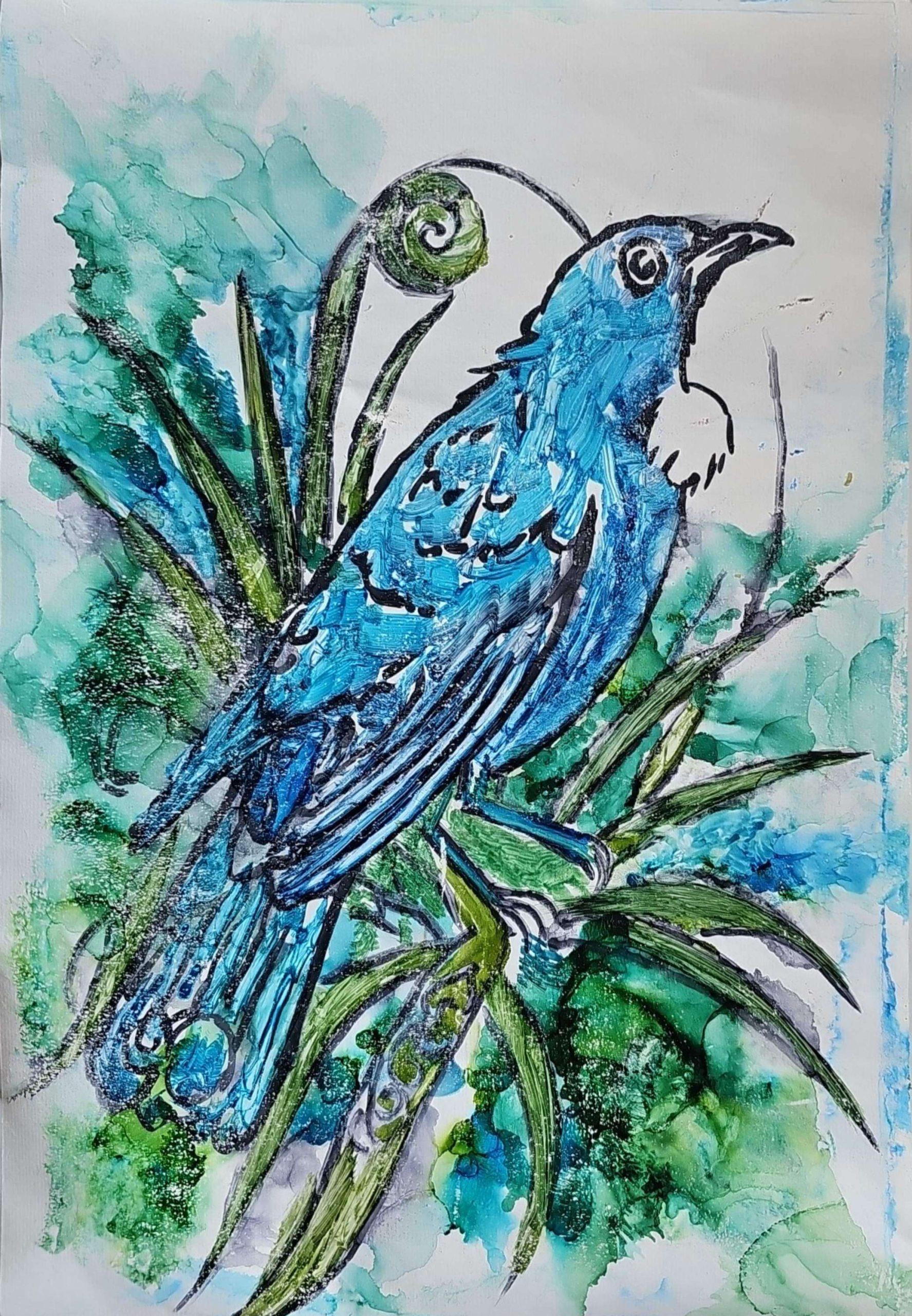
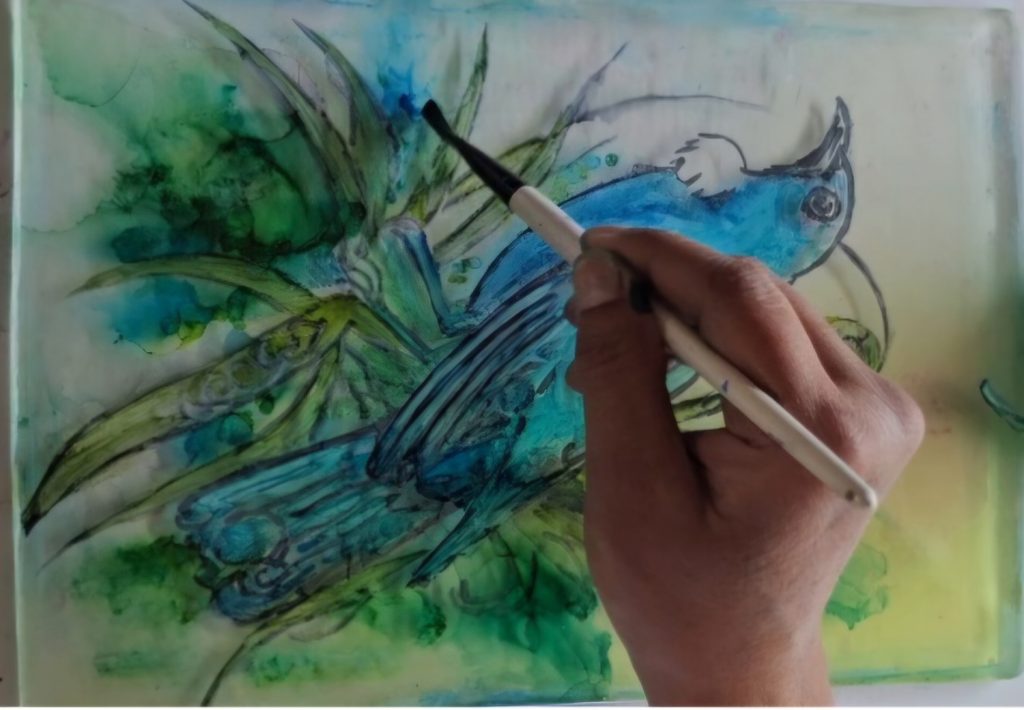
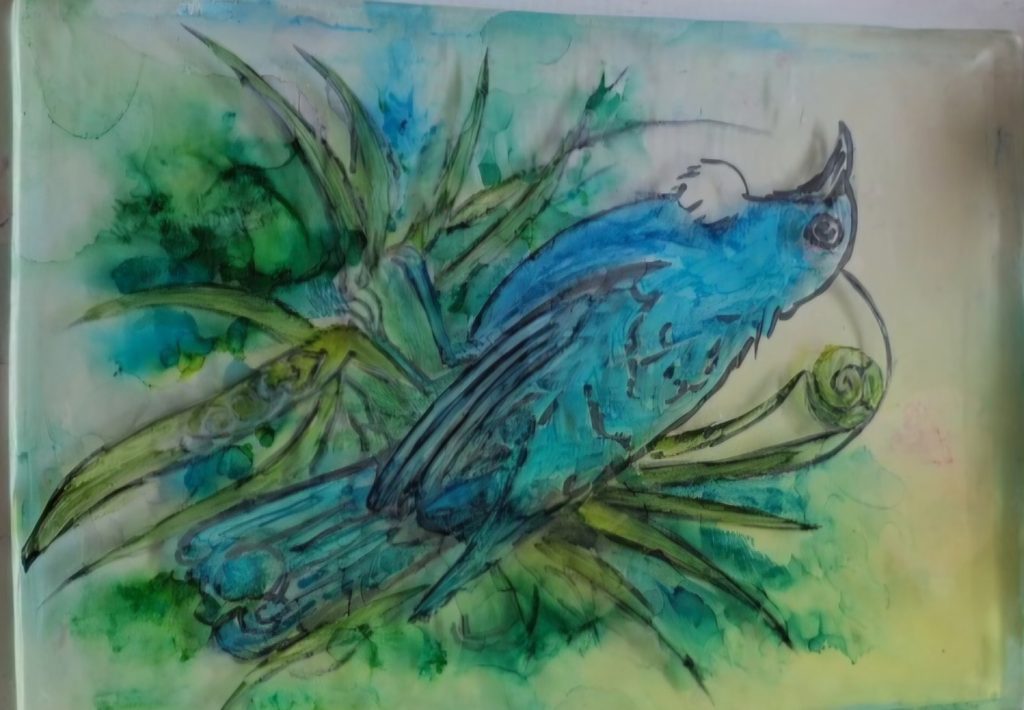
Next, I dropped some Piñata Baja Blue onto the plate and used a paintbrush to colour the bird. I then used Lime Green to add colour to the flax.
When I work this way, I don’t necessarily want to completely cover the gel plate with colour. I like leaving some of the original marks and unexpected areas visible.
The colours that are already on the surface can influence the decisions I make as I continue painting.
A soft area of colour might suggest atmosphere or distance. A few random marks might suddenly look like they belong among the foliage. Something that seemed accidental at the beginning can become an important part of the finished artwork.
Resist the temptation to tidy everything
There is always a temptation to tidy everything up.
As artists, we can sometimes feel that a finished painting should have every area carefully resolved. Every leaf should be defined. Every shape should be intentional. Every mark should have a reason.
But I don’t always want that.
Some of the rougher marks, unexpected edges and spontaneous textures are what give a piece its character.
You can see this particularly in the foliage surrounding the bird. Rather than carefully painting every single leaf, I can allow the underlying colours and textures to suggest the foliage.
The marks already on the surface create movement and energy without everything having to be described.
The background has done some of the work for me.
And I think that is one of the most enjoyable parts of working this way.
Alcohol ink brings its own character
This is another reason I enjoy working with alcohol inks.
The medium creates organic marks that can be difficult to reproduce deliberately.
Edges feather.
Colours spread.
Pigment pools.
Layers interact.
Sometimes the ink moves in a way I didn’t expect, and rather than correcting it, I can use it.
When those qualities are combined with drawing and painting, the result can have a lovely balance between control and spontaneity.
The bird can be carefully observed and drawn, while the environment around it retains some of the unpredictable character of the alcohol ink.
I don’t have to choose between a carefully considered image and an experimental
That addition fits beautifully with the idea of the artwork evolving. I’d place it after the section about the initial painting process, because it explains how the image moves from the gel plate into the final print.
When the Background Becomes Part of the Artwork
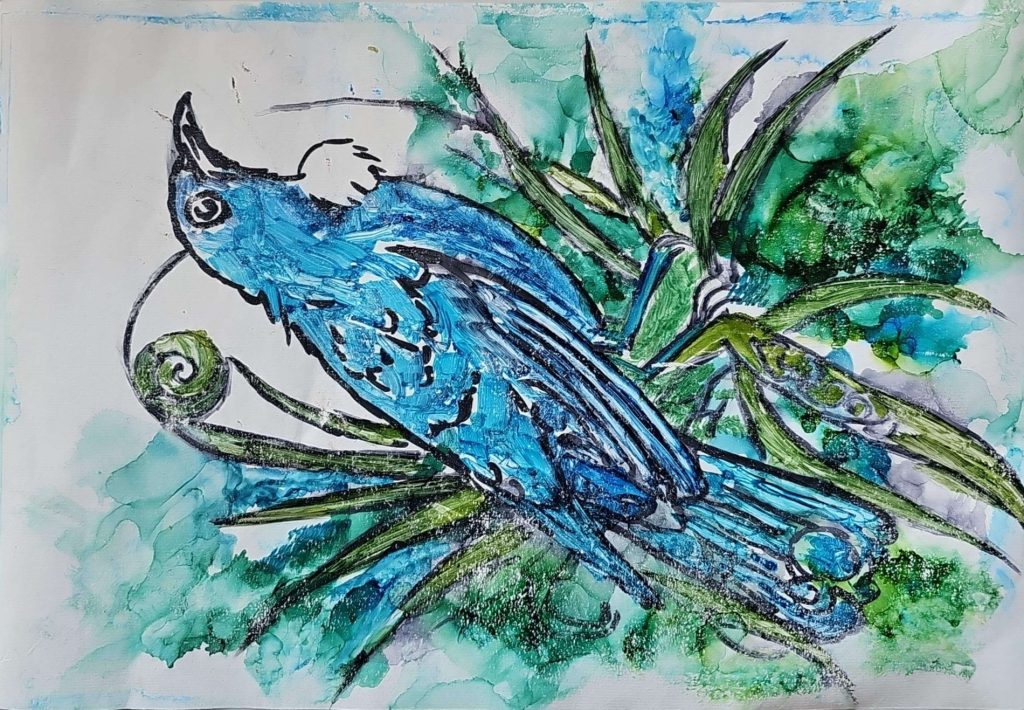
Once the inks were completely dry, I applied a layer of translucent white acrylic paint over the gel plate and then pulled the print onto calligraphy paper.
I could have left the print just as it was. There was already something interesting happening in the layers of colour, texture, and unexpected marks.
But I decided to take it a little further.
Rather than treating the gel print as the finished artwork, I wanted to use it as another layer in the process. I added more colour and finer details with alcohol inks, building on what was already there.
This is another part of the process that I really enjoy. The original print gives me a starting point, but it doesn’t dictate exactly where the artwork has to go.
I can respond to the colours and shapes that have appeared, strengthen some areas, add detail, and allow some of the original marks to remain visible.
The result is a piece that has developed through several stages—gel printing, alcohol ink, drawing, acrylic paint, and finally more alcohol ink.
Each layer contributes to something different, and the earlier layers continue to show through.
For me, this is where the process becomes particularly exciting. I am no longer simply creating an image; I am responding to what the artwork is becoming.
The finished piece carries traces of all those decisions, experiments, and unexpected moments.
And that is exactly what I love about working this way.
Leave a Reply